Iris
On device machine learning for surgical sterile processing
Product design for a machine-learning platform built for surgical sterile processing
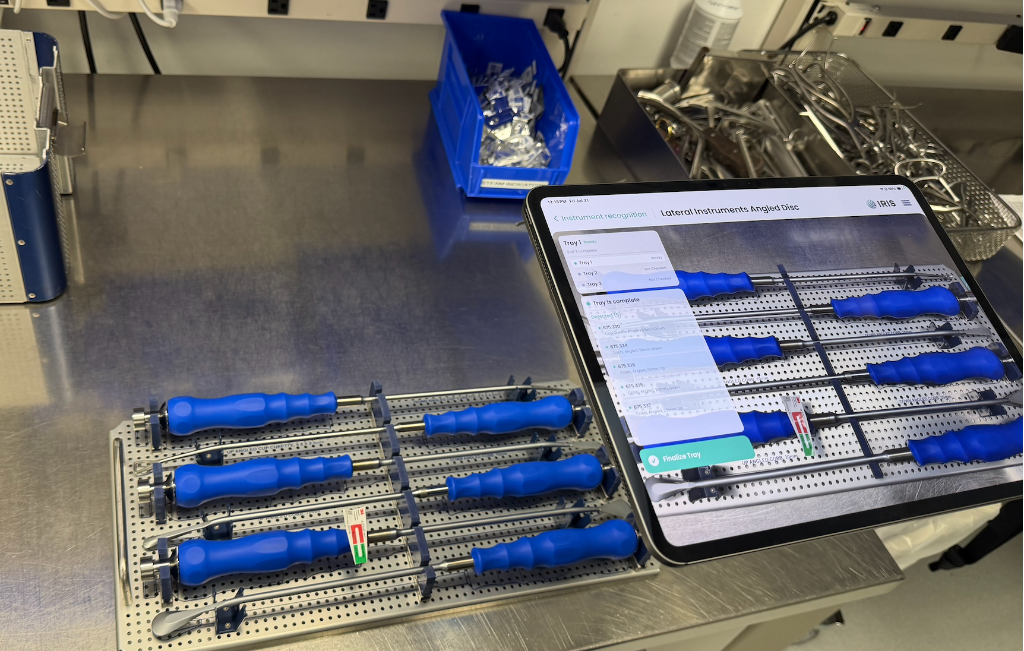
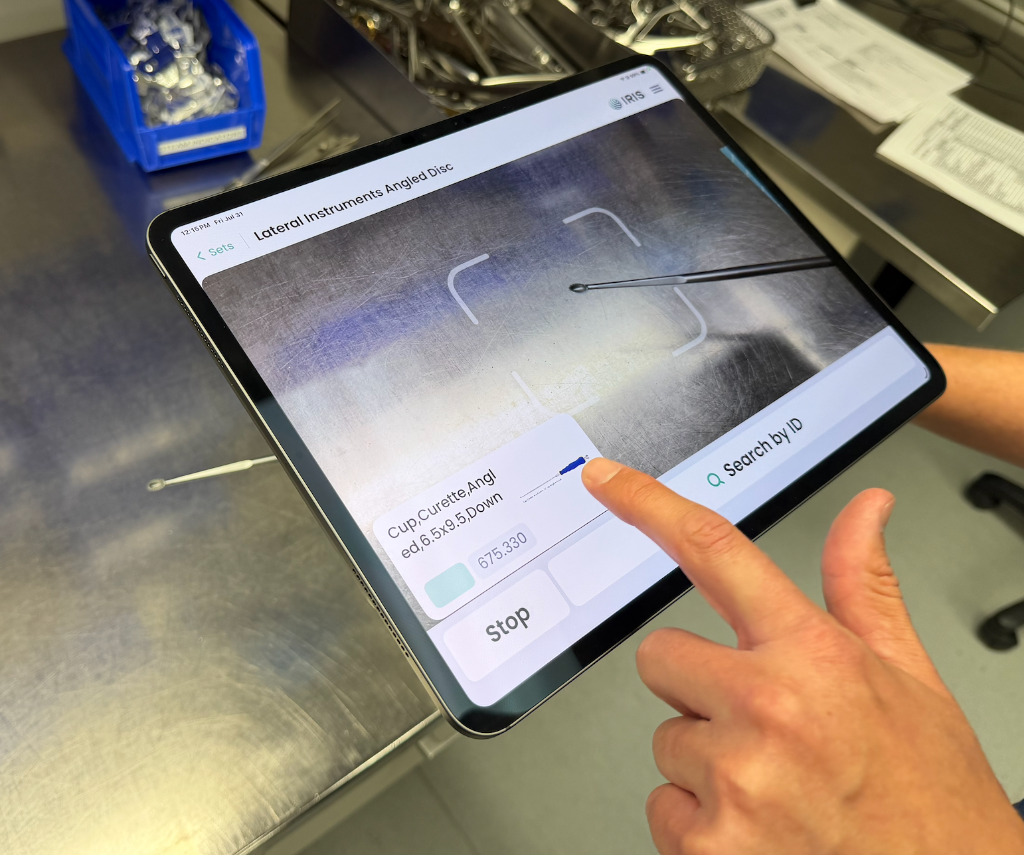
I lead product strategy, interaction design, and clinical workflow development for IRIS, designing it from the ground up around the realities of Sterile Processing. IRIS uses on-device computer vision models to recognize surgical instruments, surface processing guidance, and help technicians verify trays before they return to the OR.
The work began in the hospital. I spent many hours observing surgery to understand how instruments move through procedures and where downstream problems become visible, then shadowed SPD leaders and technicians to understand the work upstream. I tested prototypes directly with technicians and used those sessions to define the interaction model, information hierarchy, physical setup, and product requirements.
Designing for SPD meant working around constraints that are easy to miss from outside the department. These are fast-moving, crowded environments, often in hot, humid basement spaces, with limited wifi. Technicians may be wearing PPE or gloves, handling wet instruments, and moving between stations. We also had to design for the realities of device placement, camera angle, responsiveness, and interaction speed at the workstation.
I worked closely with the CEO, engineering, machine-learning specialists, outsourced production teams, hospital stakeholders, surgeons, and SPD staff to translate those constraints into product flows that could function in the real SPD environment.